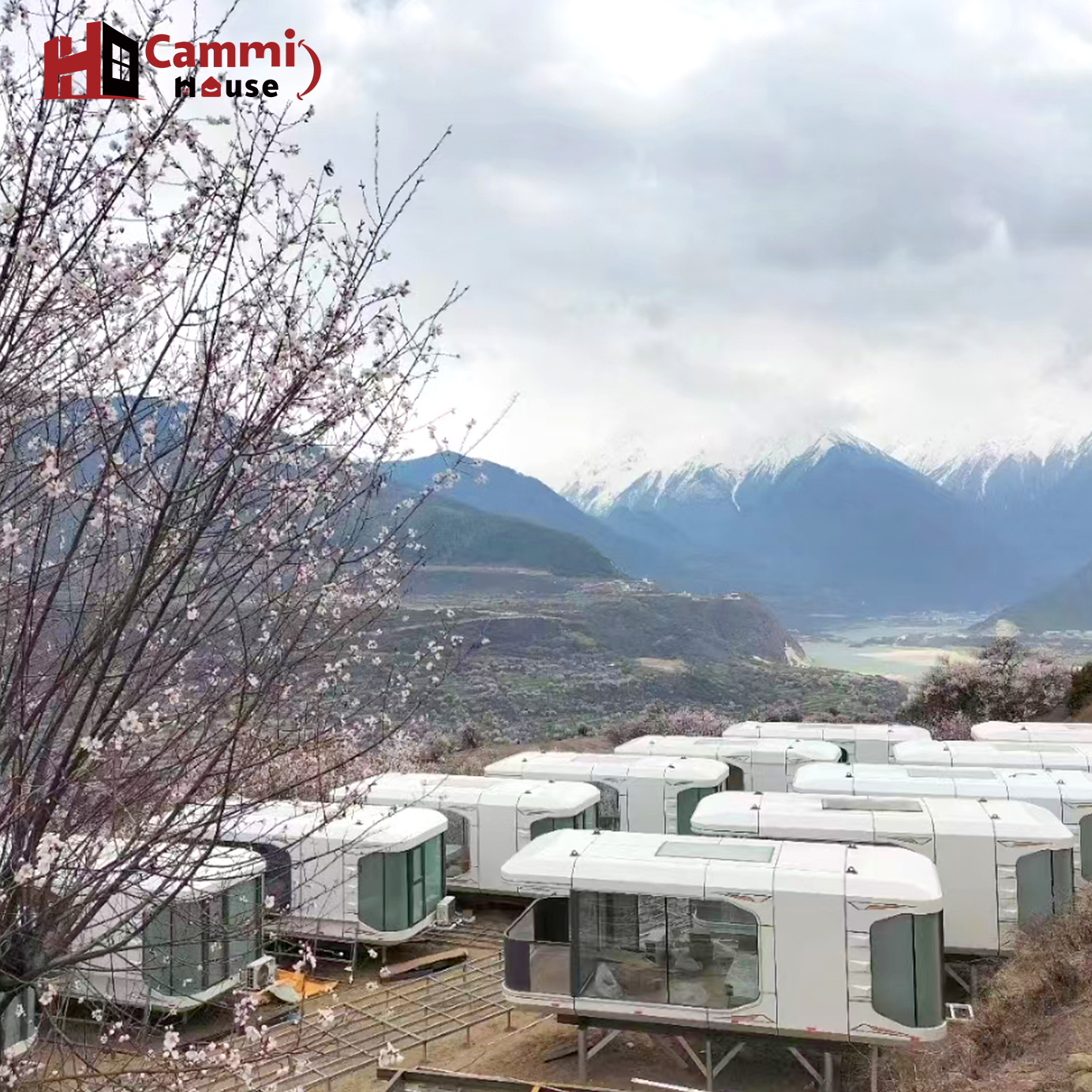
The primary advantage of a modular capsule house is its "plug-and-play" capability, which reduces onsite labor by up to 80%. Unlike traditional construction, which is prone to weather delays, these units are fabricated in a controlled factory environment.
In a 2025 Cammihouse project survey conducted across several Southeast Asian resorts, we found that the average time from order to guest check-in was just 60 days. This includes a 45-day manufacturing cycle and a 15-day transit/setup window, allowing developers to capture seasonal revenue that would be lost with brick-and-mortar builds.
A apsule house** utilizes an aviation-grade aluminum or galvanized steel monocoque shell, which provides a high strength-to-weight ratio. This makes them significantly more durable than traditional wooden cabins.
Our engineering team calculates wind load resistance to withstand Category 12 typhoons (up to 200 km/h). The rounded geometry of the shell minimizes the drag coefficient, while the integrated steel chassis ensures the unit remains anchored. Data from FEMA (2021) suggests that aerodynamic structures suffer 30% less lateral wind damage compared to flat-walled buildings.
Modern living requires strict climate control, especially when a prefab capsule house is placed in a desert or alpine environment. We utilize multi-layer insulation to achieve high energy efficiency.
By using 100mm high-density polyurethane (PU) foam with a thermal conductivity of 0.024 W/m·K, we meet ASHRAE 90.1 energy standards. This insulation reduces HVAC energy consumption by approximately 35% (U.S. DOE 2021), ensuring the interior remains a comfortable 22°C even when exterior temperatures exceed 45°C.
The "futuristic" look of a capsule house luxury model acts as its own marketing tool for resort owners. Travelers are increasingly prioritizing unique stays for social media sharing.
Resorts utilizing capsule houses guangzhou often report occupancy rates 15% to 20% higher than traditional glamping sites. The panoramic 270-degree glass walls allow for immersive nature experiences without sacrificing the privacy and security of a rigid structure.
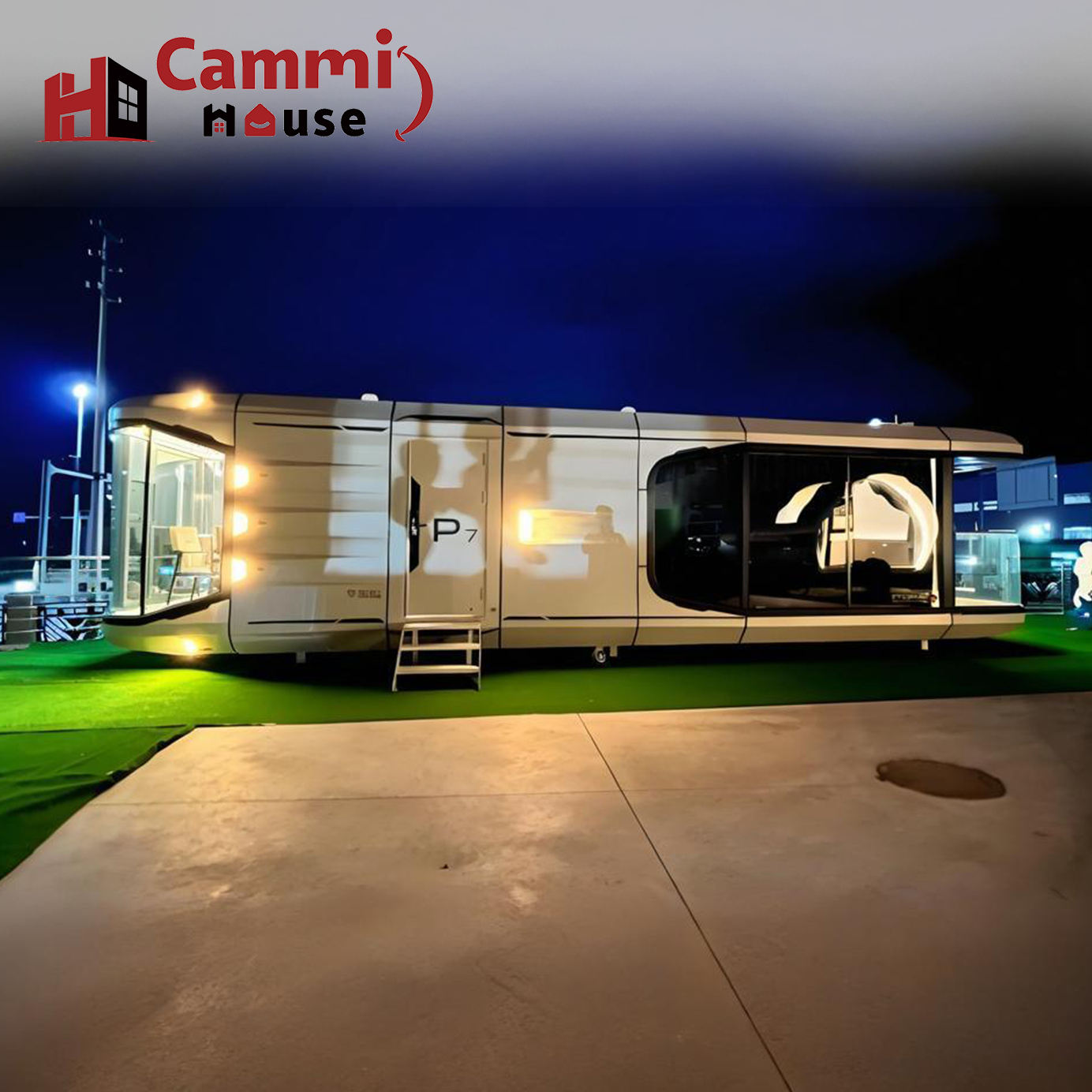
The most common drawback is the fixed width of the unit, which is dictated by shipping container standards (typically 2.4 to 3.3 meters). This creates a linear living experience that requires careful furniture planning.
A capsule house 40ft provides approximately 28 to 38 square meters of living space. To solve the "narrowness" issue, Cammihouse engineers use built-in smart furniture and hidden storage compartments, similar to yacht design, to ensure every cubic centimeter is utilized for guest comfort.
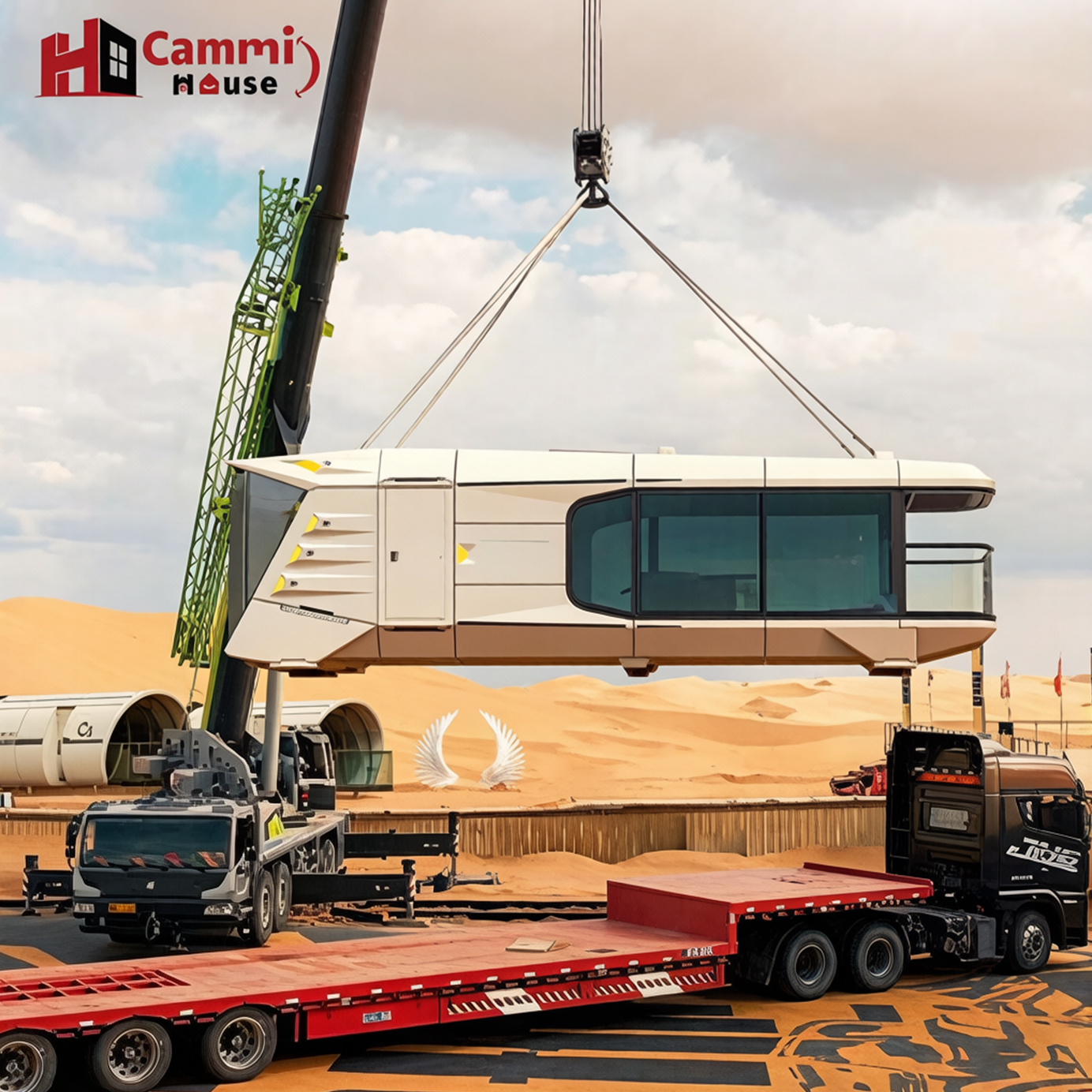
While the house itself is modular, transporting a 6,000kg to 10,000kg unit to a remote cliffside or forest requires specialized heavy machinery.
Successful delivery requires a clear 4-meter height clearance on all access roads. In a recent 2024 project, our technical team used 50-ton mobile cranes to bypass steep mountain gradients, a logistical step that must be budgeted for during the planning phase to avoid unexpected costs.
A house capsule is a precision machine that requires stable water, power, and sewage hookups to function as intended.
Developers must prepare a level foundation (concrete plinths or screw piles) and utility points before the unit arrives. At Cammihouse, we provide 1:1 scale civil engineering drawings to ensure that the "container house capsule villa for outdoor" connects seamlessly to the grid within 4 hours of arrival.
Steel and aluminum are durable, but they require specific maintenance in high-salinity coastal zones to prevent surface oxidation over a 20-year lifespan.
We subject our shells to 1,000-hour salt spray tests (ISO 9227). By using 3-layer fluorocarbon paint, we ensure the exterior remains maintenance-free for 15 years. However, in extreme coastal environments, a yearly freshwater rinse is recommended to preserve the aesthetic finish and prevent mineral buildup.