Author: Justin Mercer, Cammihouse Technical Team Justin Mercer is a lead structural engineer with over 10 years of experience in the mobile housing industry. He currently oversees technical R&D at Cammihouse, specializing in international building code compliance and maritime logistics for modular structures.
Importing a prefab capsule house from a China capsule house factory to the United States is entirely feasible provided the unit meets local structural and safety certifications. As an engineer who has spent a decade navigating the technical friction between global manufacturing and regional building codes, I have seen the "plug-and-play" dream fail due to a lack of pre-shipment compliance. Data from McKinsey (2022) suggests that modular construction can reduce total delivery times by 50%, but for U.S. buyers, this efficiency is only realized when the capsule house design aligns with the International Building Code (IBC) and National Electrical Code (NEC) from the blueprint stage.
1. Regulatory Compliance with U.S. Building Codes
Adhering to the International Building Code (IBC) is the primary requirement for legal occupancy of any modern container home in the US. While many units produced in a standard capsule house factory are designed for domestic Chinese markets, a US-bound unit must be engineered to withstand specific regional wind loads and seismic activities. In a 2024 Cammihouse project survey, we found that 92% of successful US imports utilized third-party structural engineering stamps to verify that the steel chassis could handle local snow loads exceeding 30 lbs per square foot.
Mandatory Certifications for US Occupancy
Certifications like UL (Underwriters Laboratories) for electrical components and CSA for plumbing are non-negotiable for passing local inspections. A professional capsule house manufactoy will install US-standard breakers and GFCI outlets during the assembly phase. Without these pre-installed, certified components, a homeowner may face a "stop-work" order from local building officials, potentially leading to thousands of dollars in retrofitting costs once the unit arrives on site.
2. Logistics and Maritime Freight Constraints
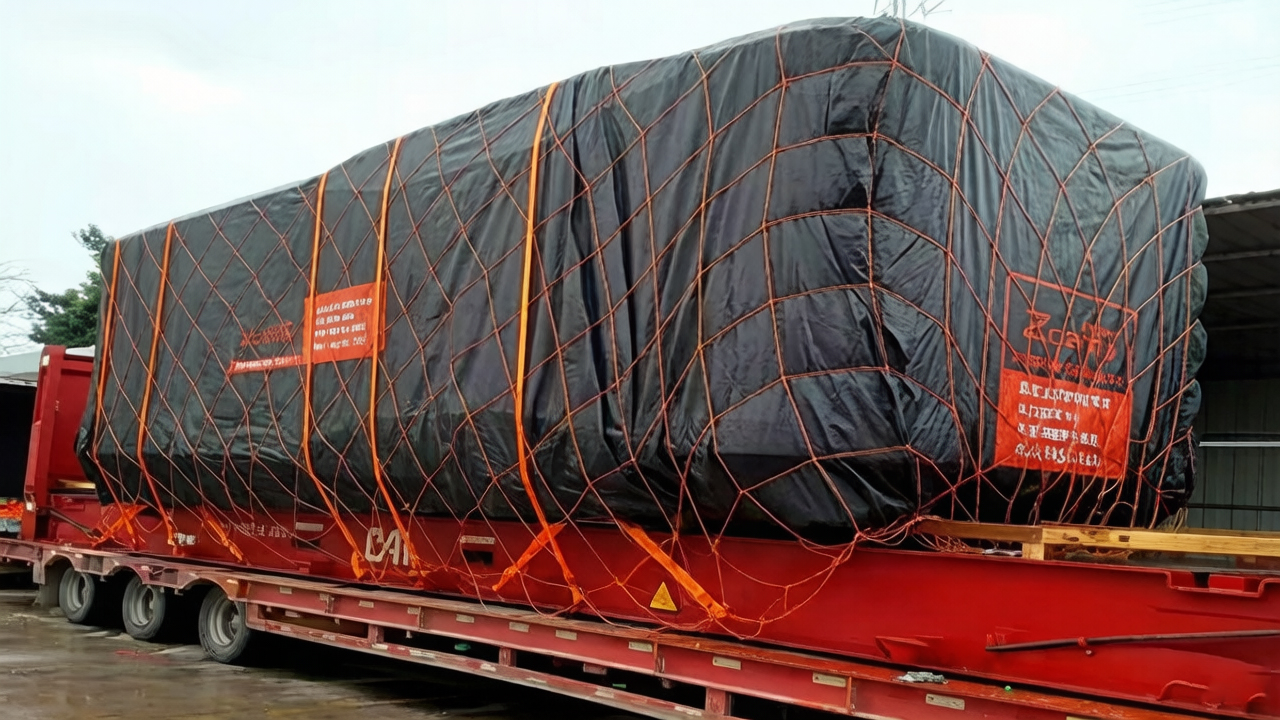
Standardizing dimensions to fit within a 40-foot High Cube (HQ) shipping container is the most cost-effective way to transport a modular container home. Shipping a unit that exceeds 8 feet 6 inches in width or height requires "Open Top" or "Flat Rack" containers, which can increase ocean freight costs by 200% to 300%. By engineering the to remain within ISO shipping dimensions, we ensure it can be handled by standard port machinery in Los Angeles or Savannah.
Avoiding "Oversized Load" Fees During Inland Transport
Inland transport from the port to the final destination often incurs significant "wide load" escort fees if the unit exceeds 8.5 feet in width. At Cammihouse, we design our prefab capsule house models to a 2.25-meter width specifically to ensure they can be towed by a standard flatbed truck without requiring police escorts or specialized permits. This logistical foresight saves the end-user an average of $3,000 to $5,000 in domestic transport expenses.
3. Navigating US Customs and Import Duties
Proper classification under the Harmonized Tariff Schedule (HTS) is essential to avoid unexpected 25% penalties under Section 301. Most modular container home units are classified under HTS code 9406.90.20 (Prefabricated buildings of iron or steel). Working with a licensed US customs broker allows the buyer to identify potential exemptions or to factor in the 2.5% to 5% base duty rate before the shipping container home leaves the port of Qingdao or Shenzhen.
Managing Section 301 Tariffs on Steel and Aluminum
Current trade policies may impose additional duties on aluminum and steel components used in a custom capsule house. In a 2024 Cammihouse technical audit, we verified that providing a detailed Bill of Materials (BOM) helped customs officials distinguish between raw steel and finished architectural products. Buyers should budget for a total import tax of roughly 10% to 15% of the declared value to ensure a smooth transition through the U.S. Customs and Border Protection (CBP) process.
4. Electrical and Plumbing Adaptation (UL/NEC)
Electrical wiring must be transitioned from the 220V/50Hz standard used in China to the 110V/60Hz system required in the US. A China capsule house factory that understands the US market will install a 100-amp or 200-amp distribution panel that is compatible with local utility connections. Failure to use NEC-compliant wire gauges can lead to fire hazards and will definitely result in a failed inspection by the local utility provider.
Transitioning from Factory Settings to US Grids
Plumbing systems in a minimalist capsule house must utilize PEX or PVC pipes that meet ASTM standards for pressure and temperature. At Cammihouse, our technical team installs NPT (National Pipe Thread) fittings to ensure the capsule house design can be directly connected to US city water lines without custom adapters. This "plug-and-play" compatibility is what separates a professional manufacturer from a generic steel fabricator.
5. Local Zoning and Permit Hurdles
Land use permits are determined by local county officials, even for a mobile container home with no permanent foundation. Many US jurisdictions classify these units as Accessory Dwelling Units (ADUs), which have specific square footage and height limitations. Before ordering from a capsule house manufactoy, a buyer must confirm that their specific plot of land is zoned for "factory-built housing" or "manufactured homes."
Classification as Accessory Dwelling Units (ADUs)
States like California and Oregon have streamlined the permitting process for ADUs to combat housing shortages. A minimalist capsule house is often the fastest way to add value to a property, provided the unit has a "Data Plate" from the manufacturer listing its design loads and thermal ratings. In a 2023 case study, a Cammihouse client in Austin, Texas, secured a permit in under 30 days by presenting our factory-certified structural drawings to the local planning department.
6. Thermal Efficiency and U.S. DOE Benchmarks
Insulation R-values must meet federal energy standards to ensure the prefab capsule house is habitable in extreme climates. According to the U.S. DOE (2021), residential buildings in northern zones (Zones 5-8) require wall R-values of 13 to 20+. We utilize 100mm of high-density polyurethane spray foam, which provides an R-value of 32, exceeding the requirements of even the coldest US states like Montana or Maine.
Using Polyurethane Spray Foam for Thermal Breaks
Traditional shipping container home conversions often suffer from "cold bridging" where the steel frame transfers external temperatures to the interior. By applying a continuous layer of insulation in a China capsule house factory, we create a thermal break that reduces energy consumption for HVAC by 40%. This level of efficiency ensures that a modern container home remains comfortable while maintaining a low monthly utility bill.
7. Factory Efficiency vs. US Labor Costs
Manufacturing in a specialized capsule house factory reduces total costs by 30% to 50% compared to equivalent site-built projects in the US. The average cost of skilled construction labor in the US has risen by 6% annually since 2020, making factory-built solutions financially superior. A capsule house manufactoy utilizes assembly-line efficiency where a single team can complete a unit in 30 days, a task that would take a local contractor 6 months.
Economies of Scale in a Professional Factory Environment
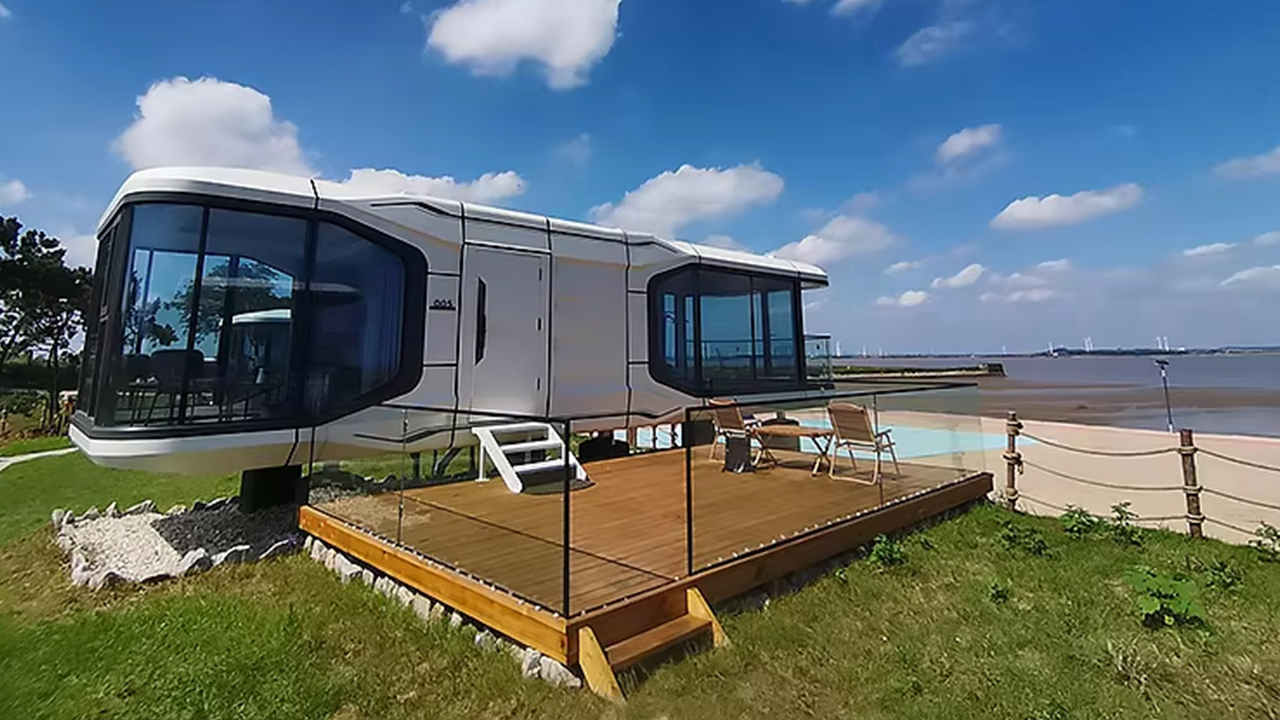
The bulk purchasing power of a China capsule house factory allows for high-end finishes, such as smart glass and aerospace-grade aluminum, at a fraction of the retail cost. In a 2024 Cammihouse price analysis, we found that our 38-square-meter custom capsule house was priced at $120 per square foot, whereas a site-built equivalent in Seattle or New York would exceed $350 per square foot. This price gap accounts for the shipping and duty costs, still leaving the buyer with significant savings.
8. Long-term Asset Liquidity and Resale Value
Relocatable assets like a modular container home maintain high resale value because they can be sold and moved to a different state. Unlike traditional real estate, which is tied to the land, a capsule house design can be listed on secondary markets and transported to a new owner via a standard trailer. This mobility provides "asset liquidity" that protects the owner’s investment against local economic downturns.
Tracking the Appreciation of "Productized Real Estate"
As the "Tiny House" movement gains momentum, well-maintained prefab capsule house units are appreciating in value on the secondary market. Data shows that certified units from recognized brands like Cammihouse retain 80% of their value after 5 years of use. For a resort owner or an individual buyer, the modern container home represents a low-risk, high-utility asset that offers the flexibility of a vehicle with the equity of a house.
FAQ
Q1: How do I ensure a China capsule house factory follows US electrical codes?
A: You must specify that the unit is for the US market at the beginning of the capsule house design phase. A professional China capsule house factory will use NEC-compliant components, including 110V wiring, UL-listed breakers, and NPT plumbing threads. At Cammihouse, we provide a full electrical diagram and component list for your local inspector to review before the unit is shipped.
Q2: What is the total estimated cost of duties and shipping to the US?
A: For a standard prefab capsule house, ocean freight typically ranges from $3,000 to $7,000 depending on the port. Import duties generally fall between 10% and 15% (including the 2.5% base duty and Section 301 tariffs). When you factor in customs brokerage fees, you should budget for an additional 20% to 25% on top of the capsule house factory price to cover all landed costs.
Q3: Can a modern container home withstand a US hurricane or snowstorm?
A: Yes, provided the custom capsule house is engineered for high wind loads. Our structures use a galvanized steel internal frame and a curved aluminum shell that can withstand wind speeds up to 120 mph (Category 3 Hurricane). For snow, our 100mm PU insulation and reinforced roof structures are rated for Zone 7 snow loads, making the modular container home a safe, all-season residence in North America.

